











Pylon

Streamlines B2B customer service with AI-driven omnichannel support and automated ticket management.
Usepylon.com
Is this your tool?
Follow for updates & deals
Get alerts for Pylon discounts, feature releases & pricing changes
Similar Tools

Convo
Analyze conversation patterns and sentiment to improve communication and relationships.

Anam
Create adaptable, lifelike AI personas for engaging conversations in various digital experiences.

Talo
Real-time interpreter translating 60 languages for video calls and events.

Exa
Search engine providing real-time data retrieval and complex query handling via powerful APIs.

ChatPDF
Interactively query PDF documents to extract information and insights using AI.

Pylon Media Gallery

Pylon (review) video
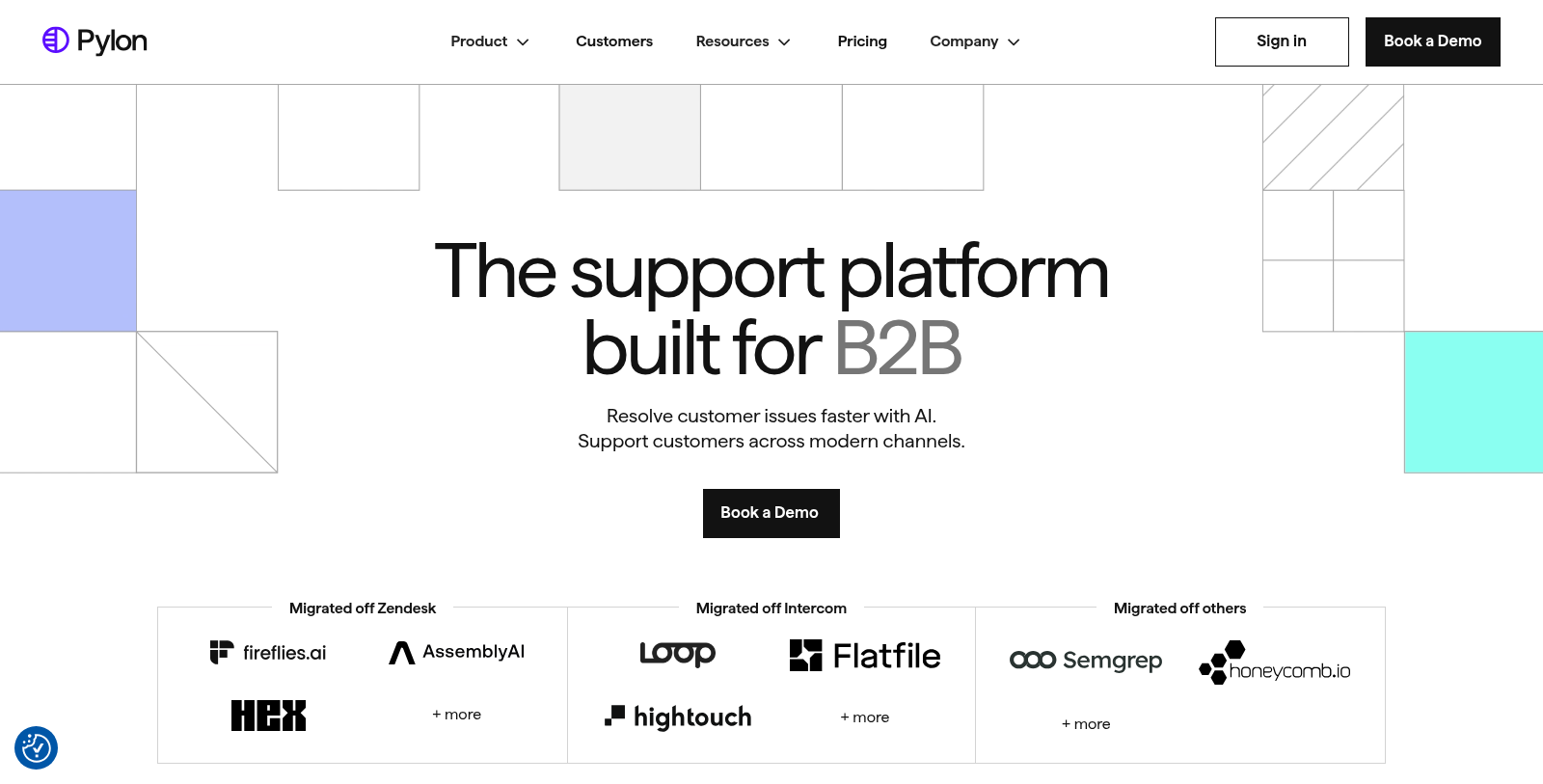
Screenshot of Pylon
What is Pylon?
Pylon is an innovative support platform designed specifically for B2B customer service, leveraging AI technology to revolutionize how support teams interact and respond to customer inquiries. Ideal for modern businesses, Pylon enhances the speed and efficiency of resolving customer issues by streamlining workflows across a multitude of communication channels, including Slack, Email, Microsoft Teams, Chat, Forms, Discord, Customer Portal, and API.
One of Pylon's most notable features is its omnichannel support capabilities. This functionality allows businesses to engage with customers wherever they are, unifying conversations from various platforms into a single, user-friendly interface. By consolidating customer interactions, Pylon makes it significantly easier for support teams to manage tickets and expedite issue resolution.
AI-Driven Automation
Pylon utilizes sophisticated AI agents and assistants to automate mundane tasks that typically bog down customer support teams. This includes automating ticket triaging, deflecting simple inquiries, generating responses, identifying knowledge gaps, and summarizing customer interactions. Thanks to machine learning, Pylon empowers support teams to delegate less critical queries to AI, freeing human agents to address more complex issues. Recent metrics indicate that users have experienced a remarkable reduction in response times, with average initial responses dropping from 35 minutes to under 3.5 minutes.
Knowledge Management
The platform boasts robust knowledge management tools, allowing teams to create, organize, and update knowledge articles swiftly. Pylon enhances knowledge base articles through AI-powered auto-translation into over 50 languages, ensuring that global teams have access to essential resources. Moreover, Pylon's knowledge base continuously learns from user interactions, automatically updating content to reflect new insights and frequently asked questions, thereby maintaining its relevance.
Account Intelligence
Pylon's account intelligence features empower teams to prioritize and track key accounts efficiently. By aggregating data from various sources, including support and sales information, Pylon provides a comprehensive overview of customer interactions. This capability not only boosts the efficiency of service agents but also strengthens client relationships by ensuring personalized support tailored to the needs of each account.
Security and Compliance
Recognizing that trust is foundational to customer relationships, Pylon takes data security and compliance seriously. The platform adheres to rigorous standards including SOC 2 Type II, GDPR, ISO 27001, and HIPAA compliance, affirming its commitment to protecting customer data. These measures emphasize Pylon's dedication to providing a secure and reliable environment for both users and their clients.
Pricing Structure
Pylon operates on a subscription-based pricing model that scales with businesses of all sizes. The pricing tiers begin at NULL per seat per month when billed annually, appealing to small startups while also providing more advanced functionalities. The Professional tier, priced at NULL per seat per month, adds features like broadcast messages, integrations, automations, and analytics capabilities. For larger enterprises, the Enterprise tier is available at NULL per seat per month and includes premium support options, custom reporting, and enhanced functionalities.
This structured pricing ensures that businesses can select options that best fit their size and support requirements. With flexibility built into its model, Pylon allows companies to adjust their service as their needs evolve over time.
Pros & Cons
Pros
- Integrates seamlessly with multiple channels like Slack, Email, Teams, and Discord.
- Automates support tasks with AI agents, significantly reducing response times.
- Offers robust knowledge management and auto-translation features in over 50 languages..
Cons
- Complexity may arise from managing multiple integrations and AI workflows.
Frequently Asked Questions
Pylon costs 59 to 139 USD per month.
According to our latest information, this tool does not seem to have a lifetime deal at the moment, unfortunately.
Pylon supports a wide range of integrations, including popular platforms such as Slack, Microsoft Teams, Salesforce, HubSpot, Pipedrive, and more. Users can connect Pylon to messaging apps to track issues directly or use APIs and webhooks for custom integrations. This flexibility allows organizations to customize their support workflows and use the tools they already use effectively
Pylon's AI is designed to assist with customer inquiries by automating tasks such as ticket triaging and response drafting. It can deflect tickets, gather internal context, and offer end-to-end resolutions based on existing knowledge. The AI can be trained using Pylon's knowledge base and external resources to ensure it delivers accurate, relevant solutions to users.
Yes, Pylon significantly reduces response times; for instance, users have reported a decrease in first response times from 35 minutes to less than 3.5 minutes. This is primarily achieved through its AI capabilities, which automate repetitive tasks, prioritize queries, and streamline workflows, allowing support teams to focus on more complex issues.
Pylon adheres to several security and compliance standards, including SOC 2 Type II, GDPR, ISO 27001, and HIPAA. This ensures that user data is handled securely and responsibly. Compliance efforts are managed with support from audit partners, and users can be confident in the platform's commitment to security best practices.
Custom fields in Pylon can be set up to add structured data to issues, accounts, and contacts. You can create custom fields via the settings menu under 'Account Fields', 'Contact Fields', and 'Issue Fields'. These fields can be filled in manually, synced from your CRM, or autofilled with AI, providing flexibility in how you capture and manage data.
Deploying AI agents in Pylon involves several steps: first, you build and configure the agent settings, including tone and workflow instructions. Next, you test the agent using simulated interactions and existing issues to ensure it responds correctly. Finally, you can assign AI agents to specific topics or automate assignment based on triggers, enabling them to handle a range of customer queries.
Absolutely! Pylon supports customers across multiple channels, including Slack, Email, Chat, Microsoft Teams, and Discord. All customer conversations can be unified in a single view, enabling support teams to manage inquiries across platforms efficiently. This omnichannel approach helps teams provide seamless support and maintain a consistent experience across all communication channels.
To get started with Pylon, book a demo to learn about its features and capabilities. Use the setup guide in the documentation to customize workflows for your organization's needs. Familiarize yourself with Pylon's API for integrations and automation processes. Additionally, consider gathering historical data from previous platforms, such as Zendesk, to streamline your migration to Pylon.