











Vercel

Streamline deployment of AI applications with efficient tools for frontend development and management.
Vercel.com
Is this your tool?
Follow for updates & deals
Get alerts for Vercel discounts, feature releases & pricing changes
Similar Tools
gpt-engineer
Generate code by specifying software requirements in natural language for various projects.

Fireworks
Easily build and customize generative AI applications using open-source models without extensive setup.

v0
AI assistant that generates UI components and provides real-time coding support for web development.

LangChain
A framework for building and deploying applications powered by large language models.

Forefront
Fine-tune and deploy open-source language models with customizable options for various AI applications.

Vercel Media Gallery

Vercel (review) video
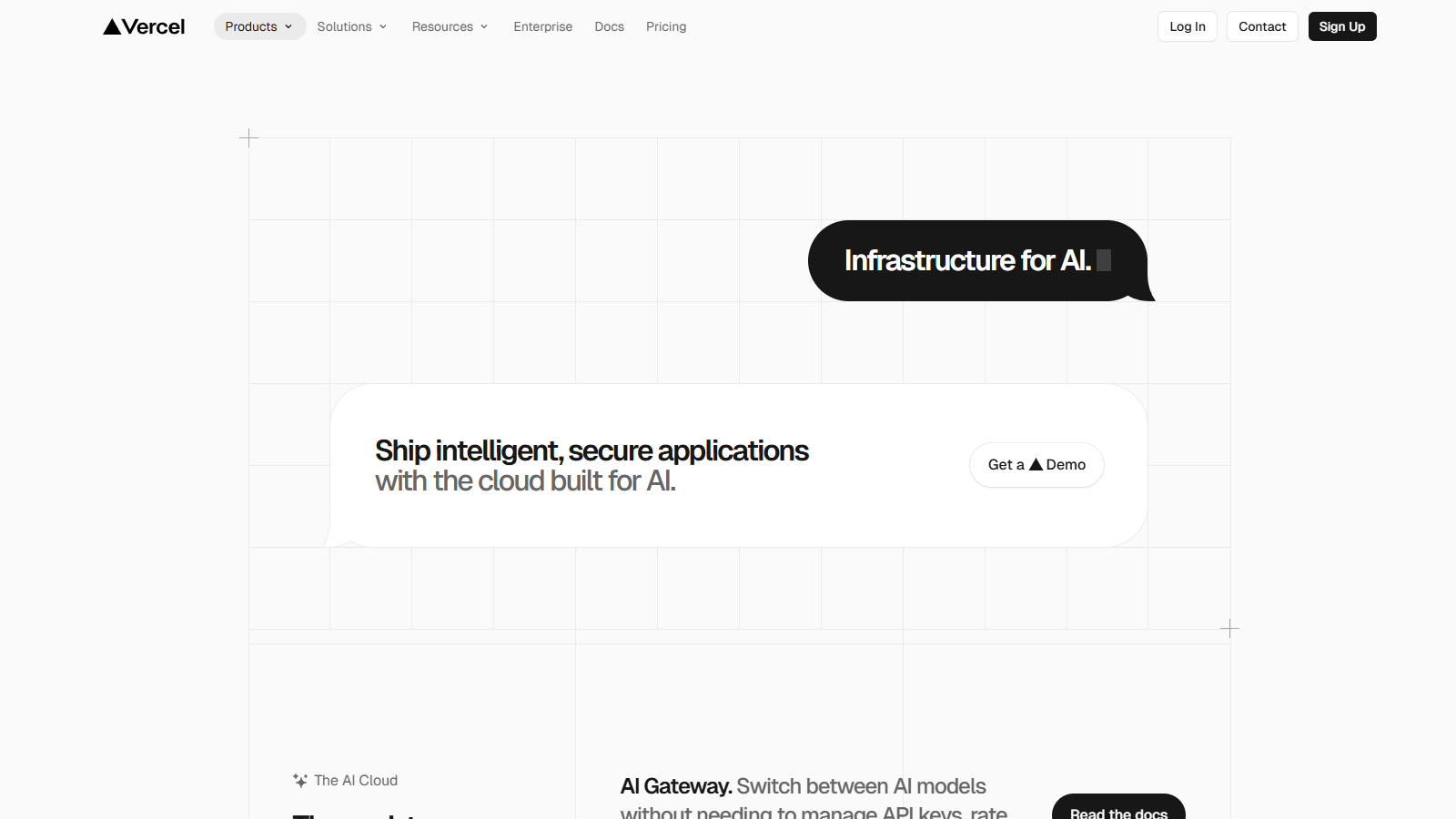
Screenshot of Vercel
What is Vercel?
Vercel is an advanced platform crafted to enhance the deployment of AI applications while significantly improving the developer experience. As a leader in frontend cloud infrastructure, Vercel's offerings help developers build, deploy, and scale applications in a seamless manner. Its dedicated AI SDK empowers developers to utilize built-in adapters, streaming UI helpers, and zero-config deployments, making Vercel not just a tool but a comprehensive solution for creating high-performance web applications. Complementing its tight integration with frameworks like Next.js, Vercel stands out for frontend developers by streamlining workflows and enhancing productivity.
Core Features of Vercel
Vercel is equipped with an array of features tailored specifically for developers, ensuring that every aspect of the deployment process is optimized for speed and efficiency.
- Fluid Compute: Vercel's Fluid Compute represents an innovative computing platform that is particularly optimized for AI workloads. It combines the speed of serverless computing with the flexibility of traditional server environments. This system efficiently manages resources, ensuring minimal costs while optimizing performance. With features like in-function concurrency, developers can expect higher concurrency management and enhanced system responsiveness, particularly during heavy loads.
- AI Gateway: A game-changing feature, the AI Gateway enables developers to easily switch between a multitude of AI models without the burden of managing API keys, rate limits, or different provider accounts. This functionality ensures comprehensive integration of various AI technologies into projects and significantly simplifies the process of implementing AI in applications.
- Security Features: Designed with developer safety as a priority, Vercel incorporates robust security mechanisms including a global defense platform, proactive DDoS mitigation, and a comprehensive web application firewall (WAF). With features like BotID, Vercel offers advanced bot management to safeguard applications against malicious traffic efficiently.
- Observability: Vercel offers sophisticated observability tools that allow developers to monitor and analyze their applications' performance. With insightful analytics, teams can gain a deep understanding of user behaviors, identify pain points, and optimize user experiences effectively.
Vercel's Impact on Development
The transition to Vercel has proven transformative for numerous organizations. For example, Leonardo.Ai reported a reduction in build times from 10 minutes to just 2 minutes post-migration, showcasing how Vercel has fundamentally changed operational efficiency. Similarly, Runway has leveraged Vercel's capabilities to reduce build times from 5-8 minutes to an impressive 40 seconds. This swift deployment turnaround allows AI-driven companies to innovate rapidly while responding immediately to market demands.
Moreover, Vercel’s AI SDK has been instrumental in allowing teams to launch applications swiftly, which is paramount in the fast-paced realm of AI development. With the right combination of functions, Fluid Compute, and observability features, companies have reported significant performance enhancements leading to a much smoother launch process.
In terms of pricing, Vercel offers a variety of plans to cater to different needs. Starting with a free tier perfect for personal or hobby projects, Vercel’s offerings also include a Pro plan priced at NULL per month, designed for more critical applications requiring additional features. For larger enterprises, an Enterprise plan is available, providing enhanced support, critical security, and performance features required for large-scale applications. This tiered pricing model ensures that teams of all sizes can access Vercel’s powerful platforms and tools.
Getting Started
For developers keen to harness the power of Vercel, getting started is simple. By signing up, developers can quickly begin deploying applications, with the platform designed to ensure that initial deployments can be executed with minimal effort. The user-friendly interface and integrated tools make it easy for both experienced developers and newcomers alike.
Conclusion
In conclusion, Vercel stands out as a premier solution for deploying AI applications and creating frontend projects. With a dedicated focus on performance, security, and user experience, Vercel equips developers with a comprehensive set of tools essential for succeeding in today’s competitive landscape. Whether transitioning from an existing platform or starting fresh, Vercel provides everything needed to hit the ground running and embark on innovative projects.
Pros & Cons
Pros
- Fast deployment with zero-config options enables quick app launches.
- The AI Gateway allows seamless switching between AI models without API management.
- Observability tools provide insight into app performance and health directly.
Frequently Asked Questions
Vercel is free to start, with paid plans from 0 to 20 USD per month.
According to our latest information, this tool does not seem to have a lifetime deal at the moment, unfortunately.
The Vercel AI Gateway enables developers to seamlessly switch between approximately 100 AI models, eliminating the need to manage multiple API keys, rate limits, or provider accounts. This simplifies the process of integrating various AI functionalities into applications, enabling faster development cycles and keeping pace with rapidly advancing AI technologies. It provides authentication and usage tracking, streamlining the workflow for developers working with AI applications.
To deploy a Next.js app using Vercel's AI SDK, you should first install the SDK by running `npm i ai` in your project. You can then create AI-native frontend applications with JavaScript or TypeScript. The SDK includes built-in templates, such as an AI Chatbot, allowing developers to easily switch between different large language models (LLMs) like OpenAI or Anthropic with minimal code changes. Be sure to check the official documentation for specific setup instructions and best practices.
Vercel's Fluid Compute provides server-like concurrency in a serverless environment, optimizing resource usage and significantly reducing costs. It allows multiple invocations of a function to be handled simultaneously, minimizing idle time. While there are certain limits based on your pricing plan, such as invocation counts and memory usage, Fluid Compute's architecture is designed to provide greater flexibility and efficiency for workloads like AI functions, improving overall application performance.
Vercel implements multiple layers of security to protect applications. This includes a global defense platform firewall that proactively defends against various attack types (L3, L4, and L7), a Web Application Firewall (WAF) for fine-tuned access control, and bot management solutions to protect against malicious traffic. Vercel is also compliant with global standards, including SOC 2 Type 2, ISO 27001, and GDPR, providing users with assurance about their data security.
Yes, Vercel supports integrations with a wide range of platforms and services, including databases, content management systems, and cloud providers. Developers can easily connect Vercel to services like AWS, Google Cloud, and various headless CMS options such as Contentful and Shopify, ensuring that you can build and manage your applications efficiently. For detailed integration guides, refer to the Vercel documentation.
Preview Deployments are a powerful feature of Vercel that allows developers to create unique, shareable URLs for every code change. This means that stakeholders can review and comment on your work directly in the browser, facilitating a smoother feedback loop. This inline commenting system enables teams to iterate more quickly and identify issues early in the development cycle, ultimately enhancing collaboration and reducing time to market.
Vercel provides a comprehensive support system that includes extensive documentation, community forums, and direct support channels for paid plans. Users can access troubleshooting guides, FAQs, best practices, and example projects that cover common challenges in deployment and integration. If further assistance is needed, users on paid plans can submit support tickets for personalized help.
Vercel provides tools to help you monitor and manage your usage according to your selected pricing plan. You can view detailed analytics on your usage, such as invocation counts and data transfer amounts, through the Vercel dashboard. Additionally, if you approach your limits, you can review the additional usage policies and purchase extra capacity if necessary. It's essential to familiarize yourself with the pricing structure to prevent unexpected charges.