











WordLift

Enhances SEO with AI by optimizing content and creating structured knowledge graphs.
Wordlift.io
Is this your tool?
Follow for updates & deals
Get alerts for WordLift discounts, feature releases & pricing changes
Similar Tools

Search Console Audit
Analyzes Google Search Console data to improve website SEO performance and traffic insights.

NeuronWriter
Use AI to analyze and enhance website content for improved SEO and audience engagement.

MarketMuse
Empowers content teams with AI-driven insights for effective topic planning and optimization.

Keyword Insights
Optimize content by researching keywords, clustering them, and generating detailed briefs for effective SEO.

BrandStori
Optimize website messaging for clarity and conversions.

WordLift Media Gallery

WordLift (review) video
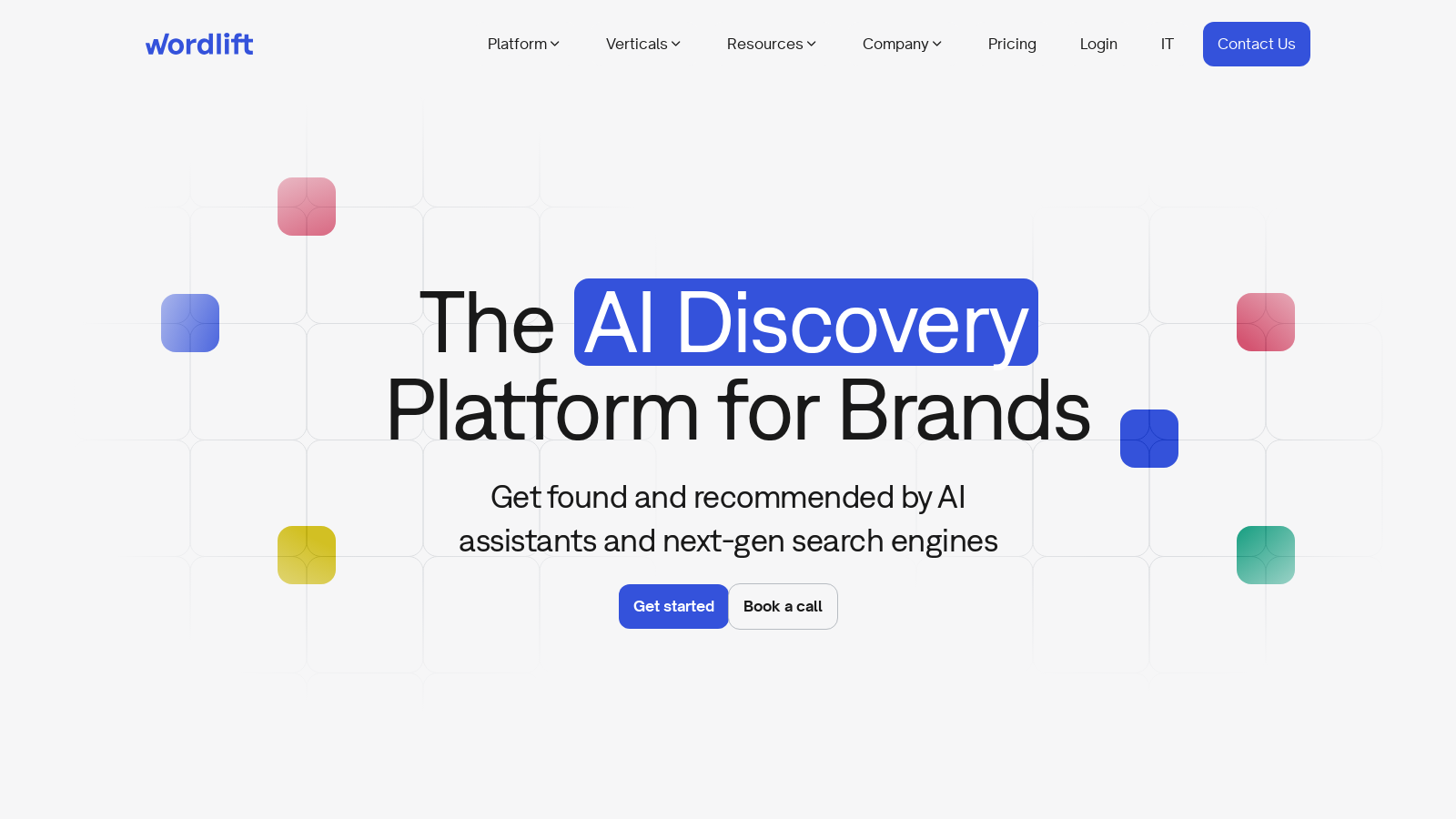
Screenshot of WordLift
What is WordLift?
WordLift is an innovative AI-powered platform designed to enhance search engine optimization (SEO) processes, catering to brands and businesses aiming to significantly improve their online presence. By combining natural language processing, knowledge graph technology, and machine learning, WordLift streamlines content management, making it easier to maximize its reach. Its advanced features facilitate effective word and entity recognition, enabling users to organize and optimize digital content efficiently. This, in turn, ensures that search engines fully understand the context and relevance of published materials, leading to increased organic traffic levels.
With over 25 years of SEO expertise embedded in its design, WordLift transforms existing data into structured knowledge graphs, providing organizations with a valuable competitive edge. This capability not only supports efficient content creation but also improves site navigation and user engagement through predictive analytics and AI-driven interactions. By automating repetitive SEO tasks, WordLift liberates valuable time for businesses, allowing them to concentrate on strategic growth initiatives.
A significant feature of WordLift is its proficiency in generating content that meets the optimization requirements of AI search engines like Google and ChatGPT. As search algorithm advancements continue, businesses must keep pace with these changes; WordLift equips users with the necessary tools to navigate this evolving landscape. Furthermore, their free audit offers a compelling entry point for teams wanting to evaluate their current SEO effectiveness while setting the foundation for smarter, future-oriented strategies.
WordLift provides diverse pricing plans that cater to the varying needs of different team sizes and goals. The Agent plan is ideal for hands-on teams and freelancers who require robust AI tools, priced at €160 per month when billed annually. This plan encompasses a full suite of features, including AI-powered content creation, SEO research and analysis, content audits, and comprehensive performance tracking. For organizations desiring more tailored support, the Business+ plan, which costs €799 per month (billed annually), grants users access to dedicated SEO experts, amplifying the features found in the basic plan. Additionally, enterprise solutions can be customized to address specific business requirements, often involving direct consultations for tailored strategies.
Recent updates highlight WordLift’s commitment to advancing SEO technology and its educational resources. The platform has launched new tools and free guides to aid users in optimizing their content for AI-driven searches. In August 2025, WordLift introduced a groundbreaking AI SEO tool that provides instant visibility insights and actionable recommendations tailored to enhance optimization for ChatGPT, Perplexity, and Google AI Overviews. This initiative reflects their focus on redefining the SEO landscape and delivering dynamic solutions to clients.
Furthermore, WordLift has forged strategic partnerships with leading technology firms, including Microsoft and Google. These alliances augment their capabilities in delivering advanced AI-driven SEO solutions, particularly through initiatives like Google’s Cloud Startup Program and the Microsoft ISV Success Program. Such collaborations not only enhance WordLift’s technological prowess but also expand its impact within digital marketing.
Serving a broad spectrum of industries such as e-commerce, media, and travel, WordLift has proven instrumental in significantly boosting online visibility and engagement. Its AI-powered tools have enabled clients to achieve substantial performance gains—such as 80% traffic increases and revenue growth—by efficiently harnessing the potential of structured data and semantic SEO.
With the growing importance of AI in the digital ecosystem, WordLift stands out by providing a comprehensive platform that empowers organizations to optimize their digital strategies. It ensures that businesses remain relevant and influential within today’s fast-paced digital environment, making it an essential resource for anyone looking to elevate their online presence.
Pros & Cons
Pros
- Utilizes AI-driven insights to enhance SEO through structured knowledge graphs.
- Enables automation of key SEO tasks like schema markup and content optimization.
- Improves user engagement with personalized content generation and entity-rich insights.
Cons
- Over-reliance on credits for AI-powered features may limit accessibility for some users.
Frequently Asked Questions
WordLift is free to start, with paid plans from 0 to 0 EUR per month.
According to our latest information, this tool does not seem to have a lifetime deal at the moment, unfortunately.
WordLift is designed for large e-commerce platforms, news organizations, and marketing agencies looking to enhance their digital presence. It offers solutions for content creation, SEO optimization, and audience engagement through structured knowledge graphs. Businesses can use WordLift to improve their SEO performance, automate content management, and leverage semantic technologies to connect with their audience and boost traffic.
WordLift is compatible with popular SEO plugins like Yoast SEO, All in One SEO Pack, and RankMath. It complements their functionalities by providing advanced semantic SEO capabilities, such as schema markup and internal linking suggestions. By integrating WordLift with these tools, users can enhance their content's metadata and improve search engine indexing and visibility without compromising their existing SEO strategy.
Credits in WordLift are tokens that allow users to access AI-driven features, such as content generation and optimization. Each subscription plan includes a certain number of credits, and users can purchase additional credits from their dashboard. Credits expire depending on the subscription type, with yearly credits expiring at the end of the subscription year and monthly credits expiring at the end of each month. Users can use credits strategically based on their content needs, such as generating product descriptions or internal linking.
WordLift enhances content marketing by automating SEO tasks, enriching content with semantic markup, and providing insights for audience engagement. It helps organize content around a coherent vocabulary, making it more accessible to users and machines. Additionally, it improves website rankings by effectively linking content and employing rich snippets, which can significantly increase user interaction and organic traffic.
To get started with WordLift, visit their website and sign up for a 14-day free trial. This trial allows you to explore the platform's features, such as AI-powered content creation and SEO optimization tools, with no obligation. After the trial, you can choose from various subscription plans tailored to your business needs. Consider reviewing the documentation and community resources for a smoother onboarding experience.
Yes, WordLift is specifically designed to optimize content for modern search engines, including AI-driven platforms like Google's AI Mode. By structuring your content with semantic markup and creating entity-rich pages, WordLift increases the likelihood of appearing in AI-generated summaries and rich snippets. This approach enhances your content's discoverability, ensuring it meets the evolving expectations of search engines and user intent.
While WordLift offers powerful tools for SEO and content optimization, there are some limitations to consider. It is primarily suited for WordPress users, which may restrict adoption for those using different content management systems. Additionally, users might need to dedicate time to training their teams on how to use the platform's advanced features, such as knowledge graphs and credit management. Regular updates and maintenance of the WordLift plugin are also necessary to ensure optimal performance.
When using WordLift, focus on metrics that reflect your SEO performance and content effectiveness. Key performance indicators (KPIs) include organic traffic growth, user engagement metrics (like time on page and bounce rate), keyword rankings, and conversion rates. Additionally, monitor visibility in AI-driven search results and branded search volume to assess how well your content connects with your audience and meets their needs.