











Zhipu

Develops AI models that replicate human cognitive processes for improved machine interaction.
Zhipuai.cn
Is this your tool?
Follow for updates & deals
Get alerts for Zhipu discounts, feature releases & pricing changes
Similar Tools

Gitmore
Automates GitHub and Bitbucket reporting to transform repository activities into structured insights.

Promptfoo
Evaluate and secure large language model applications with an open-source command-line interface.
Fireworks
Easily build and customize generative AI applications using open-source models without extensive setup.

Firecrawl
An API for efficiently scraping and structuring web data tailored for AI applications.

Trickle
Create and manage websites, AI applications, and forms without coding or technical expertise.

Zhipu Media Gallery

Zhipu (review) video
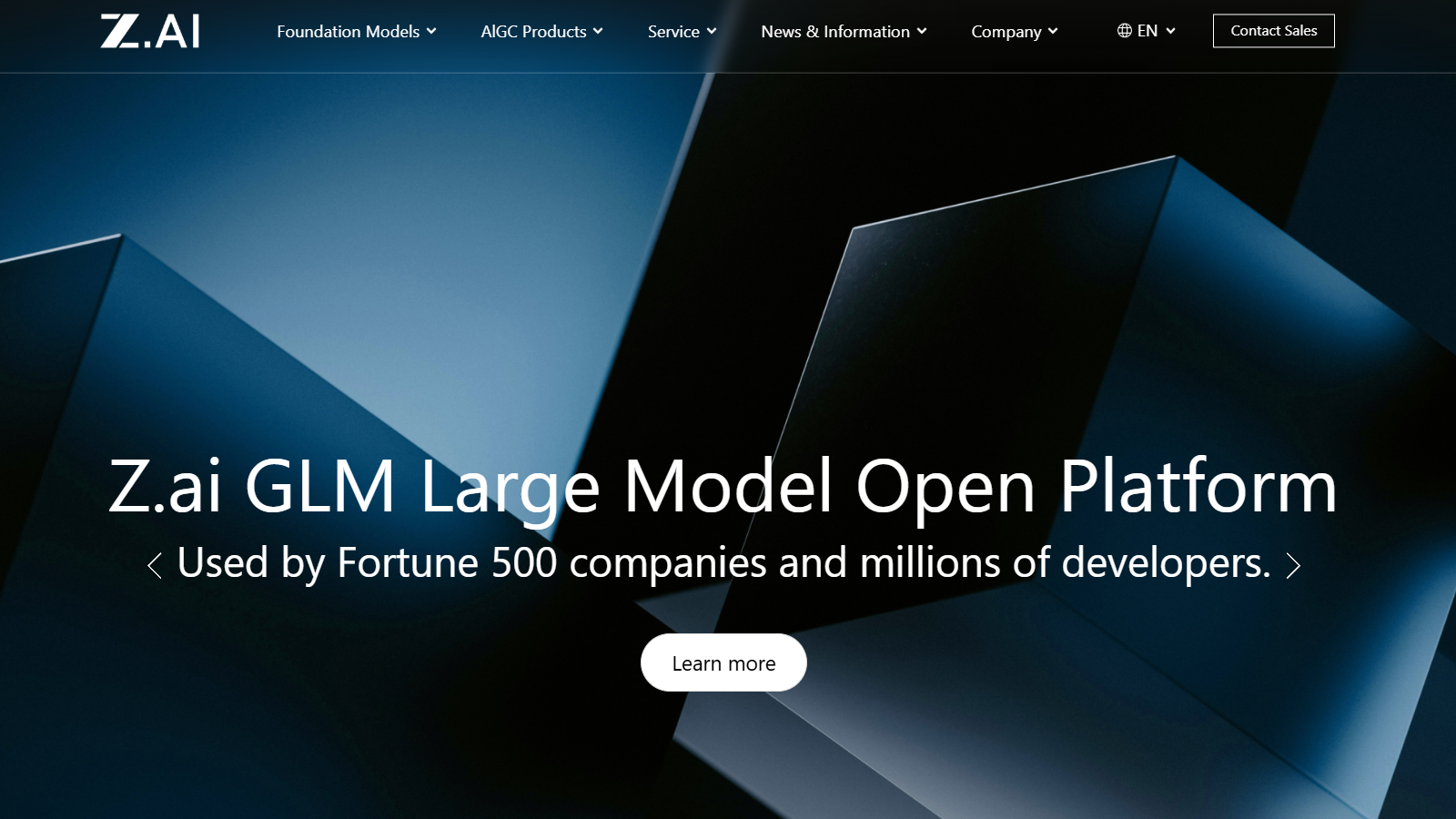
Screenshot of Zhipu
What is Zhipu?
Zhipu is at the forefront of artificial intelligence, specializing in developing foundation models designed to mimic human cognition.
The company is recognized for its advanced GLM (Generative Language Model) platforms, which have been widely adopted by Fortune 500 companies and millions of developers around the globe.
Core Offerings
With a mission to enhance human-machine interaction, Zhipu offers several innovative solutions including:
- Z.ai GLM Large Model Open Platform: An open-source platform that enables users to have access to powerful AI models.
- CoCo: An enterprise-grade AI agent tailored specifically for business needs, providing personalized functionalities.
- AutoGLM: Designed to integrate seamlessly into everyday tasks, it represents AI's next big step in user engagement.
- CodeGeeX: A free AI-powered programming assistant that greatly enhances productivity by assisting in code generation, conversion, and bug fixing.
- Knowledge Gene: An intelligent analysis system that supports data-driven decisions with in-depth reporting capabilities.
Open Source Models
One of Zhipu's standout features is its extensive suite of open-source models, including:
- GLM-4: A latest foundation model that has received accolades for its performance in multilingual contexts.
- CogView: An image generation model that translates textual descriptions into high-quality visual representations.
Other models include GLM-130B, known for its capacity to assist in writing over 20 million lines of code daily, and Zhipu QingYan, which supports multi-turn dialogues and aids in content creation and summarization.
Strategic Vision and Community Support
Zhipu aims not only to innovate but also to build a robust ecosystem by supporting foundation model startups through funding, technological resources, and promotional avenues. This initiative, dubbed "Plan Z," has already aided over a thousand startups in their AI development journey.
With its headquarters nestled in Beijing and a global outreach, Zhipu envisions a future where technology serves humanity by enhancing interaction and understanding between humans and machines.
Conclusion
Zhipu is not just a company; it embodies ambition in the AI space, aspiring to extend the frontiers of machine learning and cognitive computing. With its commitment to open-source technologies and comprehension of complex user needs, Zhipu is dedicated to shaping the future of AI development.
Pros & Cons
Pros
- The platform offers large-scale, open-source AI models suited for diverse applications.
- Capabilities include bilingual support and powerful tools for programming and content creation.
- Strong focus on community support for foundation model startups with funding and resources.
Cons
- Some models may require substantial computational resources, limiting accessibility for users.
Frequently Asked Questions
Zhipu offers a freemium model with free features available and premium options for advanced functionality.
According to our latest information, this tool does not seem to have a lifetime deal at the moment, unfortunately.
Zhipu QingYan is a 130B-scale bilingual model that excels in supporting multi-turn conversations. It is designed for content creation and information summarization, making it well-suited for applications requiring interactive dialogue and informative outputs. Users can leverage its capabilities for tasks such as customer support or creative writing.
The Zhipu MaaS (Model-as-a-Service) Platform provides access to next-generation cognitive intelligence large models. Users can explore a variety of features and deploy models without needing to manage the underlying infrastructure. Access to this platform is typically provided through their official website, and users are encouraged to check for any registration or subscription requirements.
To run Zhipu models, such as GLM-130B, locally, a consumer-grade GPU with at least 24GB of memory is recommended, especially for handling larger models. For users with limited resources, models can also be quantized to reduce memory usage, allowing deployment on systems with lower specifications while maintaining acceptable performance.
Zhipu provides various integrations through their models, including features for coding assistance, tool calls, and natural language conversation. For example, CodeGeeX functions as a free AI programming assistant supporting over 100 programming languages. Users should refer to the documentation for specifics on API and plugin integrations to enhance their applications.
While Zhipu models are powerful, certain limitations should be considered. For instance, model performance can degrade in scenarios that require extremely long context or when pushed beyond their designed capacities. Additionally, while local deployment is possible, resource constraints may limit the effectiveness and speed of the models, notably on lower-grade hardware.
Developers can finetune Zhipu models by following the provided scripts in the model repository. This involves cloning the repository, installing the necessary dependencies, and utilizing the finetuning kit provided. Guidance can be found in the `finetune/README.md`, where example scripts and required computational resources are outlined.
Zhipu offers a program called 'Plan Z', which supports foundation model startups by providing resources such as funding, access to technology, and computing power. Startups can apply for support to offset costs associated with developing AI solutions, making it an excellent opportunity for new entrants in the AI field.
To ensure optimal performance of Zhipu models, it is recommended to use the latest version of the models and to utilize powerful hardware with sufficient memory. Moreover, engaging in proper model quantization and leveraging tools like YaRN for managing long contexts can significantly enhance functionality. Regularly referring to Zhipu's documentation for updates and best practices is also advised.