











Atono

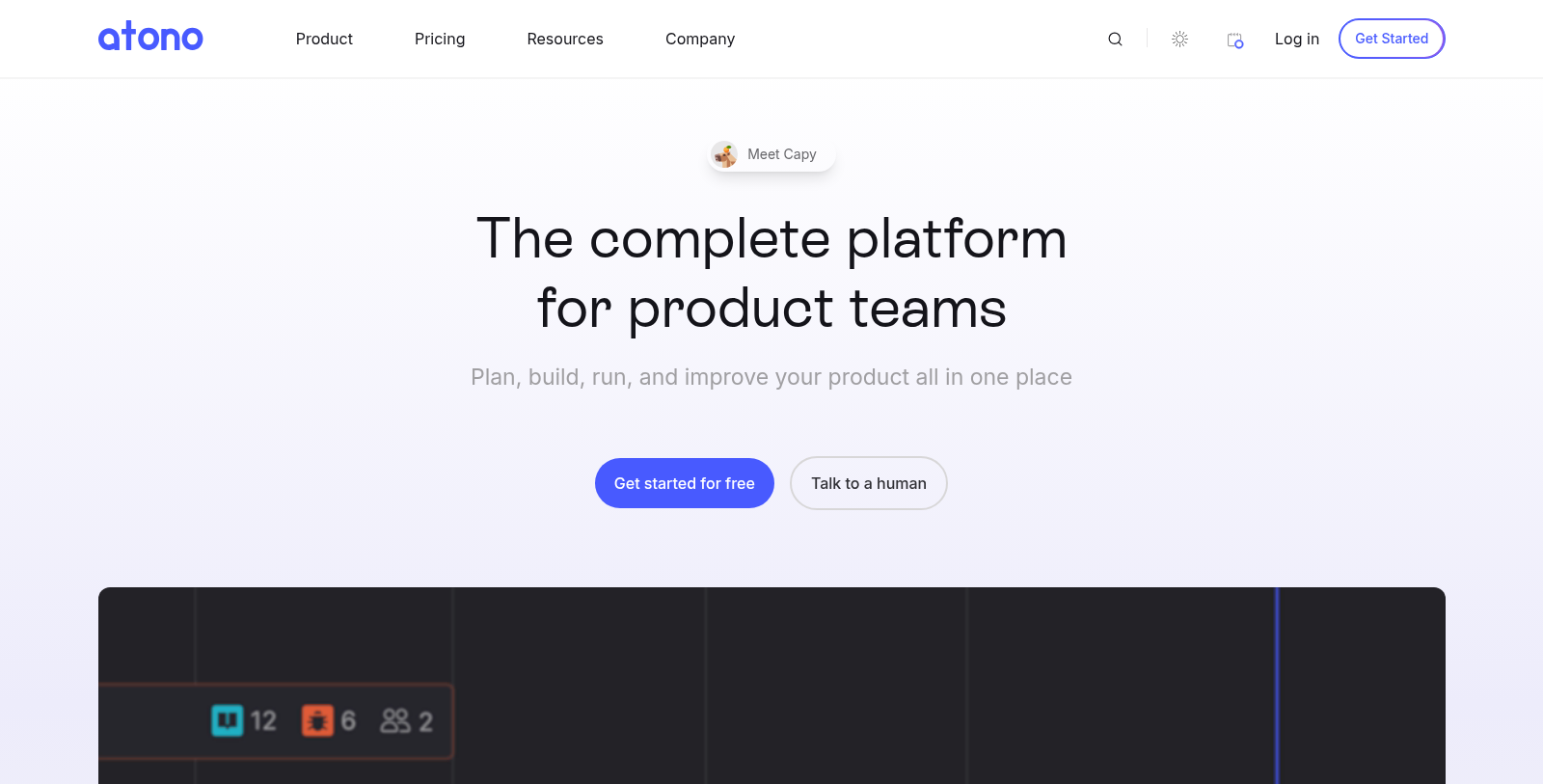
A comprehensive platform for product teams to collaboratively plan, build, and manage software development.
Atono.io
Is this your tool?
Follow for updates & deals
Get alerts for Atono discounts, feature releases & pricing changes
Similar Tools

cubic
Automates code reviews and provides instant feedback on pull requests to enhance coding efficiency.

Sourcegraph
Automates code changes and enhances search capabilities across multiple repositories for better software development.

Ciroos
AI-powered support for Site Reliability Engineers to automate incident management and streamline workflows.

LangSmith
Platform for debugging, monitoring, and evaluating performance of LLM applications.

Weave
AI analytics for engineering teams.

Atono Media Gallery

Atono (review) video
Screenshot of Atono
What is Atono?
Atono is a comprehensive platform designed to empower product teams in building better software through enhanced collaboration. This unique tool integrates the essential processes of planning, building, running, and improving products into a cohesive environment that streamlines workflows and reduces the clutter of multiple, unaligned tools.
Redefining Team Collaboration
Atono’s core philosophy is that successful software development hinges on seamless teamwork. Traditional tools often create fragmentation, leading to inefficiencies and communication obstacles. Atono tackles these challenges head-on by providing an all-in-one solution that allows team members to engage collaboratively from the inception of an idea to the final deployment of a product.
AI-Assisted Workflows
One of Atono's most innovative features is its AI-assisted workflows. These intelligent systems offer real-time suggestions and insights throughout the development process, ensuring teams can track their progress, refine project stories, and deploy updates safely. With contextual information at their fingertips, teams can avoid duplications and explore enhancements based on actionable insights. Moreover, the Atono MCP (Model Context Protocol) server optimally bridges communication between AI tools and Atono, facilitating smooth workflow management.
Comprehensive Product Lifecycle Management
Atono encompasses all stages of the product lifecycle. Whether brainstorming ideas, refining user stories, or analyzing engagement data, Atono provides tools for collaboration, timelines, feature deployments, and deep analytics. This offers teams refined control over product rollouts through functionalities such as targeted deployments and risk management protocols, empowering informed decision-making.
Highlighted Features of Atono
Collaboration Tools
Manage projects effortlessly with Kanban boards, visual timelines, and collaborative story refinement, ensuring that everyone stays aligned. With Atono’s integration with GitHub, teams can also automatically track pull requests and ongoing development activities.
Integrated Analytics
Leverage built-in analytics to gauge feature engagement and user interactions, thus enabling data-driven decision-making. The enhanced AI pattern recognition capabilities help teams identify trends and make future developments more impactful.
Custom Workflows
Adapt workflows to meet the specific needs of your team while ensuring efficiency and transparency throughout different stages of the development cycle.
Support and Scalability
Atono is designed for teams of all sizes, from nimble startups to established enterprises, ensuring that every organization can benefit from a unified toolset. Its flexible pricing structure allows teams to scale their Atono usage as their needs change.
Feature Flags and Risk Management
Gain precise control over feature rollouts with robust feature flags that facilitate intelligent segmentation of deployments. Atono also provides instant rollback capabilities, ensuring that teams can effectively manage risk in production environments.
Opting for Atono equips product teams with a streamlined approach to project management, significantly reducing cognitive strain typically associated with fragmented toolsets. By addressing these pain points, Atono steers teams toward building superior software through enhanced cooperation, transparency, and cutting-edge technology.
Your Free and Flexible Option
Atono adopts a freemium model, which permits teams of up to five users to access essential features without incurring costs. As team sizes grow, more advanced functionalities can be unlocked via paid plans. The Business plan offers unlimited user access starting at NULL per user/month for any users beyond the initial five. This pricing structure allows teams to expand their use of Atono as their requirements evolve. With Atono, teams can consolidate their tools and enhance efficiency in the competitive software development landscape.
Pros & Cons
Pros
- AI-assisted workflows enhance team collaboration and efficiency throughout the product lifecycle.
- Integrated feature management allows for precise control over feature rollouts and user engagement tracking.
- The platform consolidates multiple tools into one cohesive solution, reducing complexity and context-switching.
Cons
- May lack certain advanced customizations that larger enterprises require in project management tools.
Frequently Asked Questions
Atono is free to start, with paid plans from 0 to 14 USD per month.
According to our latest information, this tool does not seem to have a lifetime deal at the moment, unfortunately.
Atono offers a comprehensive suite of features designed to support product teams throughout the software development lifecycle. Key features include story refinement tools, visual project-tracking timelines, Kanban boards, feature flag management, and built-in analytics for measuring feature engagement. Atono also facilitates cross-role collaboration with tools such as customizable workflows, bug tracking, and AI-assisted services that suggest improvements and prevent duplicate work.
To get started with Atono, visit their website and sign up for a free account. The platform allows up to five users to access its features at no charge. Once registered, explore the available tutorials that cover core topics such as managing work, reporting bugs, and feature rollouts. Additionally, the 'Welcome to Atono' guide provides a quick overview and other resources to help you set up your projects effectively.
Atono offers several integrations to enhance your development workflows, including Slack and GitHub. The GitHub integration allows teams to link pull requests directly to stories and bugs, improving visibility into development status. Furthermore, Atono's Model Context Protocol (MCP) server allows AI coding assistants to interact directly with Atono, automating tasks and enhancing productivity across tools.
Yes, Atono is designed to enhance bug management with features such as a Chrome extension for one-click bug reporting, risk ratings to prioritize issues, and intelligent suggestions to prevent duplicate bug reports. This streamlined approach enables teams to efficiently manage and resolve bugs, ensuring a smoother release process and improving overall software quality.
Atono fosters cross-functional collaboration by providing a unified platform that enables product managers, designers, and developers to work together seamlessly. Features such as living user stories that evolve with the project, visual timelines, and shared context allow team members to communicate clearly and stay aligned without the distraction of multiple tools. This cohesive environment helps break down silos and improve information flow.
Atono provides control over feature rollouts with built-in feature flags that allow teams to toggle features on or off instantly. This capability ensures teams can safely test new features with specific user segments and environments, reducing the risk of disrupting production. Moreover, Atono simplifies feature flag management, keeping the codebase clean and organized.
If you need support while using Atono, you can access the Atono Community for help on project setup and to connect with other users. Additionally, the platform provides access to extensive documentation and tutorials covering a range of features and functionality. If you prefer direct assistance, you can contact the Atono team via their contact form on the website.
Atono positions itself as a clean, lean, and stress-free alternative to traditional project management tools such as Jira and ClickUp. It aims to reduce complexity while focusing on features that support effective collaboration, such as guided user story writing, real-time visibility into development, and streamlined bug reporting. Users have noted that Atono's intuitive UI and modular pricing structure set it apart from competitors, making it an appealing choice for modern development teams.