











cubic

Automates code reviews and provides instant feedback on pull requests to enhance coding efficiency.
Cubic.dev
Is this your tool?
Follow for updates & deals
Get alerts for cubic discounts, feature releases & pricing changes
Similar Tools

Ciroos
AI-powered support for Site Reliability Engineers to automate incident management and streamline workflows.

Haize Labs
Comprehensive testing solutions to ensure the reliability of AI systems and their safe deployment.

Weave
AI analytics for engineering teams.

Sourcegraph
Automates code changes and enhances search capabilities across multiple repositories for better software development.

Anyscale
A platform for developers to build and scale AI applications using Ray and optimized runtime services.

cubic Media Gallery

cubic (review) video
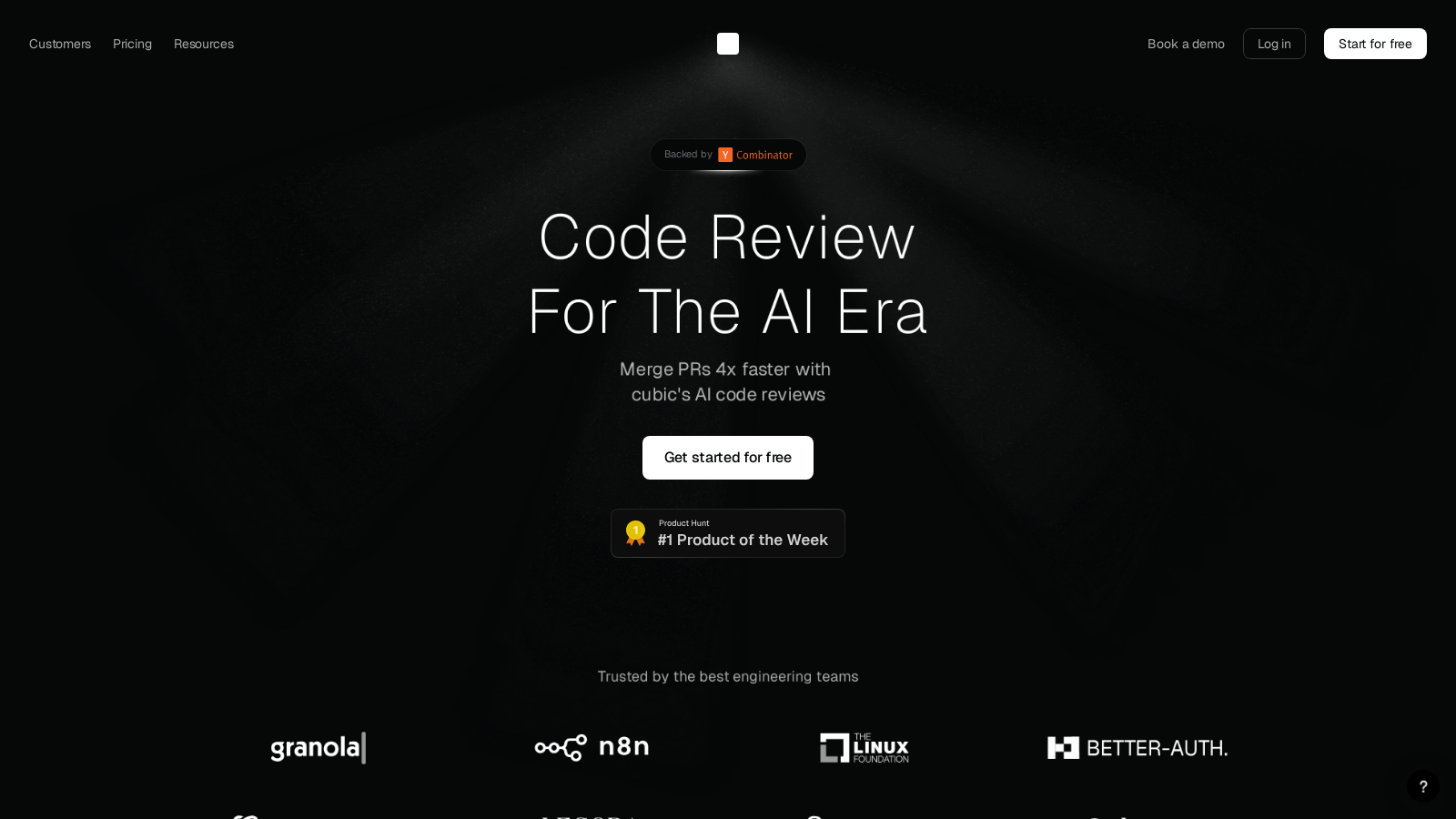
Screenshot of cubic
What is cubic?
Cubic is the world's first AI-powered code review platform designed to help engineering teams enhance their productivity and the quality of their code. As coding activity continues to increase, traditional review methods can become bottlenecks, hindering development workflows. With Cubic, advanced AI technologies automate and streamline the code review process, striking an optimal balance between speed and quality.
Instant Reviews on Pull Requests
One of the most significant advancements brought by Cubic is its ability to deliver instant reviews on pull requests (PRs). This allows developers to receive inline feedback within moments of submitting their code. Cubic's AI evaluates each PR against established guidelines and best practices tailored to an organization’s unique coding standards, enabling teams to ship their software with unprecedented speed and efficiency.
Advanced AI Insights
Cubic doesn’t just provide feedback; it also highlights context-aware insights that aid developers in understanding the implications and impact of their changes. By generating AI-driven summaries of what each PR involves, developers can more easily comprehend the broader context of their code changes, which leads to better-informed decision-making.
One-click Fixes
Beyond merely identifying issues, Cubic allows developers to resolve simple problems with a single click. For more complex issues, a background agent can be initiated to manage these tasks efficiently. This seamless approach minimizes the friction typically associated with code reviews, empowering teams to react quickly to problems.
Custom Rules and Learning
Cubic also enhances its functionality by learning from your organization’s comment history, which improves its suggestions over time. Developers can enforce custom rules or select from suggested ones, ensuring that coding standards evolve in tandem with the team’s experience and expertise. With the ability to define agents in plain English to enforce codebase rules, Cubic is accessible for developers at any skill level.
Integration with Existing Tools
Integration is a cornerstone of Cubic’s functionality, allowing it to work alongside tools such as GitHub, Jira, Linear, and Asana. This seamless integration offers real-time validation of business logic and acceptance criteria during the review process, ensuring teams can employ Cubic without disrupting their established workflows. Moreover, Cubic supports a two-way sync, allowing comments and PRs to sync seamlessly between GitHub and Cubic.
Continuous Codebase Scans
Cubic features a powerful codebase scanning capability, where thousands of AI agents continuously analyze the full codebase to detect serious bugs and vulnerabilities. By automatically notifying issue owners and creating tickets for further action, Cubic ensures ongoing vigilance over code quality, significantly reducing the time spent on security and bug-hunting tasks.
Privacy and Security First
Security and privacy are paramount for Cubic. The platform guarantees that no code is stored or used to train the AI. Each review occurs in a secure, temporary environment, and all code is permanently deleted once the evaluation is complete. Their commitment to high security standards is reinforced by SOC 2 compliance, providing assurance to users regarding the protection of their sensitive information.
Pricing Plans
Cubic is versatile in pricing, offering a free plan perfect for small projects or teams, which allows for 20 AI PR reviews monthly at no charge. For larger teams, a standard plan is available at NULL per developer monthly, or NULL per developer when billed annually, which provides unlimited reviews. Additionally, an enterprise-level option is offered, featuring custom pricing to meet the unique requirements of organizations that demand advanced features and dedicated support. Open source teams can also benefit from Cubic, as they can use the platform completely free for public repositories.
Conclusion
In summary, Cubic is a game-changing tool that goes beyond traditional code review methods; it empowers development teams to function more effectively and efficiently. Embracing AI technology enhances coding quality and speeds up the review process, ultimately leading to improved productivity across the board. By choosing Cubic, teams can expect to minimize review times, enhance code quality, and elevate overall team morale.
Pros & Cons
Pros
- AI performs automatic code reviews, significantly speeding up the PR process.
- Custom rules can be tailored to enforce specific coding standards across multiple repositories.
- Real-time issue tracking checks if PRs meet linked issue criteria, enhancing collaboration.
Cons
- Each repository can only enable a maximum of 5 custom rules at a time.
Frequently Asked Questions
cubic is free to start, with paid plans from 0 to 30 USD per month.
According to our latest information, this tool does not seem to have a lifetime deal at the moment, unfortunately.
Cubic is designed to be language-agnostic and supports all popular programming languages, including JavaScript, TypeScript, Python, Go, Ruby, Java, and C#. This flexibility allows teams using diverse programming environments to benefit from Cubic's AI-powered code review capabilities.
Cubic prioritizes security and privacy by processing your code in a short-lived isolated sandbox without storing it permanently. Their systems are SOC 2 Type I compliant, which adds a layer of trust regarding data handling practices. They also explicitly prohibit the use of your code for training purposes by AI model providers, and they provide transparent operations regarding their data handling practices.
Yes, Cubic allows you to create custom rules to enforce your team's coding standards. You can pick from suggested rules or create your own by specifying guidelines in natural language or code patterns. However, each repository can have a maximum of five active custom rules at a time. Ensure that you manage these efficiently to maintain optimal code quality.
Cubic integrates with popular issue trackers, including Jira, Linear, and Asana. These integrations enable Cubic to verify that pull requests meet the acceptance criteria defined in your linked issues, thereby enhancing the effectiveness of AI code reviews by providing additional context within the process. Currently, integrations with other tools, such as Notion and Confluence, are in development.
If you require support or have any questions about Cubic, you can reach out through their support email at contact@cubic.dev. They also have extensive documentation available on their website, which may help resolve common queries and provide guidance on using the platform efficiently.
Cubic has a limitation on reviewing large pull requests; if a pull request consists of more than 150 files (excluding specific ignored files), cubic will review only the first 150 eligible files. Additionally, rule checks are performed only once when the pull request is first opened, and follow-up commits do not trigger additional checks.
Cubic employs a learning mechanism that allows it to adapt based on feedback from your team. When you respond to Cubic's comments, it remembers your feedback and gets better over time by integrating team-specific patterns and rules into its review processes. This means Cubic continually refines its suggestions to fit the unique context of your team's coding practices.
Yes, Cubic offers a free plan specifically for public repositories, enabling open-source teams to benefit from unlimited AI code reviews. This initiative supports the open-source community by providing essential tools for efficient code review at no additional cost.