Shape

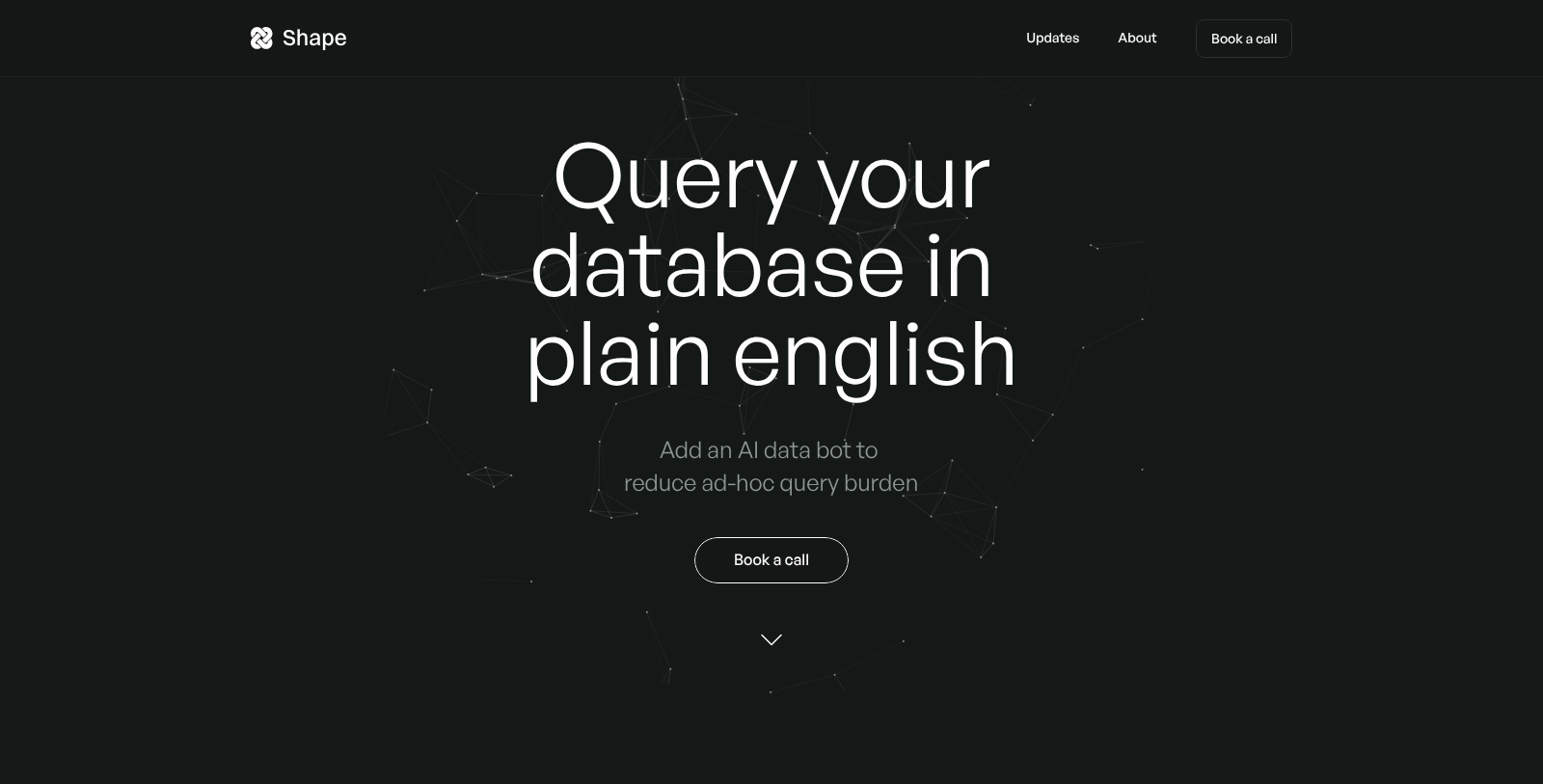
AI data analyst that lets you query your database in plain English
Shape.xyz
Is this your tool?
Follow for updates & deals
Get alerts for Shape discounts, feature releases & pricing changes
Similar Tools

Dramatica
A data-driven tool that helps writers enhance narrative clarity and consistency in their stories.

Feen AI
AI tool to assist students with math, essays, and PDF summaries for a better learning experience.

Google DeepMind
Developing AI systems for scientific discovery, healthcare, and tackling societal challenges.

Mintlify
Automated documentation platform that integrates AI to streamline content creation and updates for development teams.

RowSpeak
Simplifies Excel data analysis and visualization using natural language queries for actionable insights.

Shape Media Gallery
What is Shape?
Shape describes itself as an AI data analyst. Users ask questions in natural language, such as sign-ups in the past month or campaign ROI, and the engine turns them into queries against their own database.
The site says the engine interprets questions like an analyst: it handles advanced SQL including complex joins and unions, and it states assumptions and caveats alongside the answer, for example how a term like last month was interpreted.
The product is pitched as an AI data bot that reduces the burden of ad-hoc query requests on data teams, and it works with common data stacks. The site offers booking a call rather than listing pricing.
Shape lists data sources it works with under a section about the user's datastack, but the site does not publish plan prices.
Pros & Cons
Pros
- Answers plain-English questions by writing SQL with joins and unions against your own database.
- States the assumptions behind each answer, such as how a time range was interpreted.
Frequently Asked Questions
We have no pricing information available now, so please check the Shape's website.
According to our latest information, this tool does not seem to have a lifetime deal at the moment, unfortunately.
Shape is aimed at teams that field many ad-hoc data questions and want to cut down the backlog of query requests on the data team. Colleagues can ask questions in plain English, such as sign-ups in the past month or campaign ROI, and get answers drawn from their own database. The site describes it as an AI data bot that works with common data stacks.
Shape states its assumptions and caveats alongside each answer. For example, it shows how a term like last month was interpreted, so readers can see the basis for a number. Reviewing those assumptions helps confirm the question was understood correctly before anyone acts on the result.
According to the site, Shape writes SQL and handles advanced queries, including complex joins and unions. It interprets natural-language questions the way an analyst would. Since the queries run against your own database, check results on important reports and confirm current capabilities on the official website.
Shape lists the data sources it works with in a section about the user's datastack, and it describes support for common data stacks. The listing text does not name each connector, so confirm the full list of supported sources on the official website. The site offers booking a call to discuss your setup.