







Serval

AI-powered
AI-native enterprise service management that automates employee requests and IT workflows
Serval.comOpens in new tabIs this your tool? Claim this page
Claim Your Tool Page
Free to claim • Premium features available
- Verified Badge – Show users your tool is legitimate with a verified checkmark that builds instant credibility.
- Edit Your Profile – Update descriptions, screenshots, pricing, and keep your listing accurate and up-to-date.
- Boost Visibility – Get featured placements, priority listing in categories, and promotional badges to stand out.
- Respond to Reviews – Engage with your users by responding to feedback and building trust with potential customers.
Follow for updates & deals
Get alerts for Serval discounts, feature releases & pricing changes
Similar Tools

Warmloom
Outbound prospecting tool that finds timely buyers, verifies emails and sends from your own mailbox

Markopolo AI
Agent-led customer engagement platform for ecommerce across email, SMS and WhatsApp

Blotato
Social media API and MCP server to create, schedule and publish posts from AI agents and ChatGPT or Claude

Alsona
AI agents that find buyers from intent signals and run personalized LinkedIn and email outreach

ZeroTwo
AI agent that plans a goal, works across your files, apps and the web, and returns finished work

Truewind
AI accounting agents that turn bank statements into journal entries and reconciliations

Toffu
AI agent for paid media agencies that monitors campaigns, applies approved fixes and builds client reports

The Drive AI
AI file assistant that organises, searches and creates documents across Drive, OneDrive and Dropbox
New Tools

Text Generator
OpenAI-compatible API giving access to many AI text, vision and speech models through one endpoint

RambleFix
Turns spoken voice notes into polished emails, notes and summaries on web, iPhone and Mac

QuickCreator
AI content team of agents that researches, writes and optimizes SEO articles in your brand voice

Linfo.ai
Summarizes articles, YouTube videos and documents into takeaways, outlines and mind maps

Brain Pod AI
AI platform for writing, images and chat, now evolving into Charigent with AI characters and workflows

AutoBlogging.Pro
Generates SEO-optimized blog articles with GPT models and publishes them to WordPress automatically

Vsub
Turns a script or voiceover into narrated, illustrated faceless videos using your own style template

VideoToPage
Turns YouTube videos, uploads and recordings into blog posts, articles and social posts

Serval Media Gallery
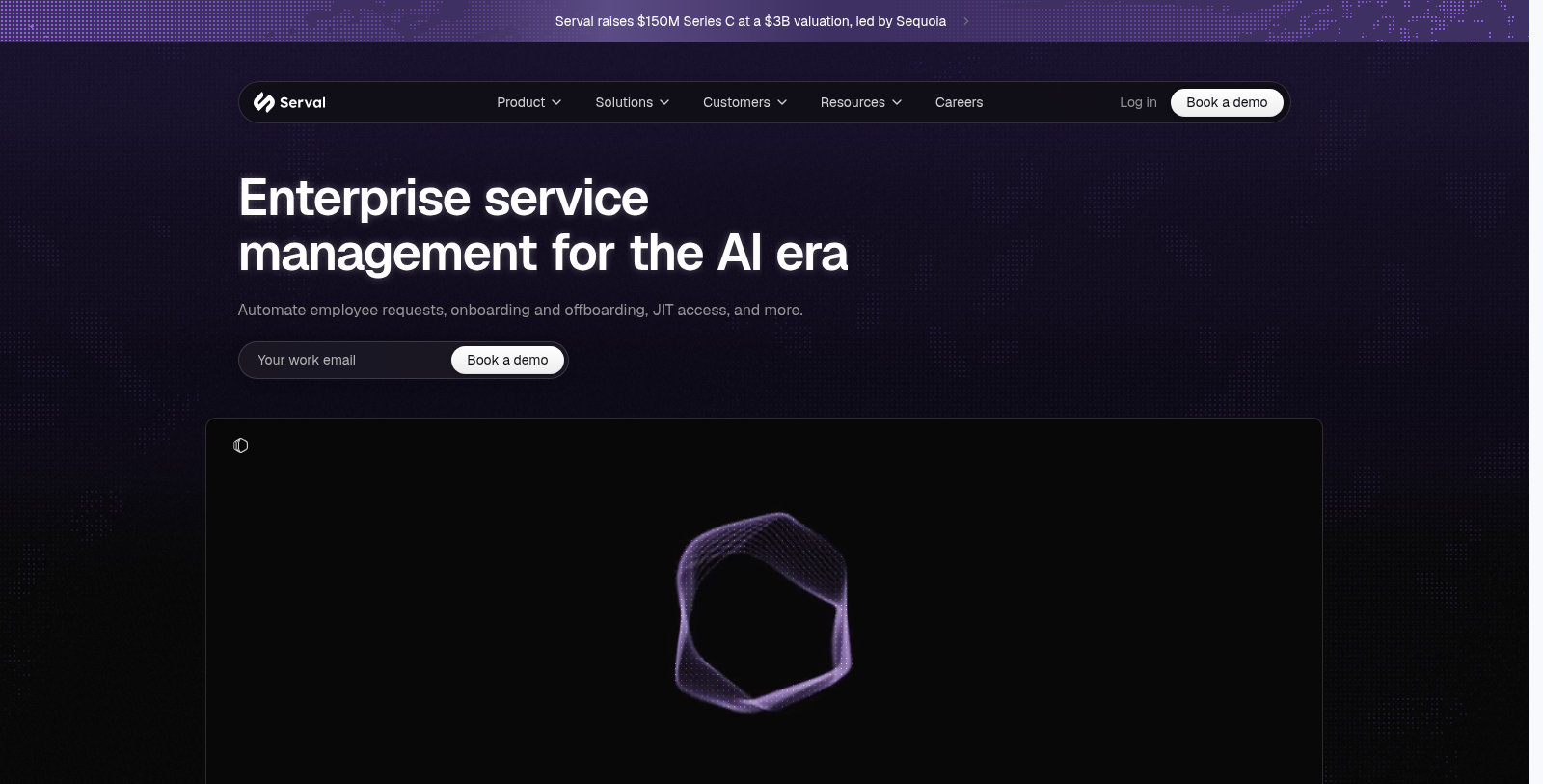
Screenshot of Serval
What is Serval?
Serval is an enterprise service management and ITSM platform built around AI agents. It can act as a full help desk and system of record, or as an automation layer on top of an existing ESM tool.
A help desk agent resolves employee requests in Slack, Microsoft Teams, email or a portal, while a Catalyst agent builds workflows, skills and access requests from natural-language instructions and ticket history. Background agents look for problems across tickets, devices and apps and propose fixes for approval.
Automations run as deterministic TypeScript workflows that admins review and publish before they act on connected systems. Serval is aimed at IT and operations teams, and engagements start with a pilot and a custom proposal.
Pros & Cons
Pros
- Automations are reviewed and published by admins before they act on connected systems.
- Employee requests can be handled in Slack, Microsoft Teams, email or a portal.
- Background agents propose fixes across tickets, devices and apps for approval.
Cons
- Engagements start with a pilot and a custom proposal.
Frequently Asked Questions
How much does Serval cost?
Serval is a paid service. Check their website for pricing.
Does Serval have a lifetime deal?
According to our latest information, this tool does not seem to have a lifetime deal at the moment, unfortunately.
How does the Serval help desk agent handle employee requests?
The help desk agent resolves employee requests in Slack, Microsoft Teams, email or a portal. Serval can run as a full help desk and system of record. It can also act as an automation layer on top of an existing ESM tool. Teams can pick the setup that fits how their service management already works.
What does the Catalyst agent do?
The Catalyst agent builds workflows, skills and access requests. Admins give it instructions in natural language, and it draws on ticket history to build the result. Admins can review what it builds before anything is published. This helps teams create new automations without starting from a blank page.
How do background agents help with IT problems?
Background agents look for problems across tickets, devices and apps. They then propose fixes, which are sent for approval before anything changes. IT teams can then decide which proposals to approve. This lets them review suggested actions before they take effect.
Are Serval automations reviewed before they act on systems?
Automations run as deterministic TypeScript workflows, and admins review and publish each one before it acts on connected systems. Serval is aimed at IT and operations teams. Engagements begin with a pilot and a custom proposal, so teams can assess fit first.
Notice: This website uses affiliate links to earn commissions from sales. Please read their ToS when signing up somewhere.